If you run a lifted truck — especially one with lift blocks, big tires, or serious power — you've probably experienced (or will experience) axle wrap and wheel hop. These issues don't just feel bad; they can damage leaf springs, u-joints, and driveline components over time.
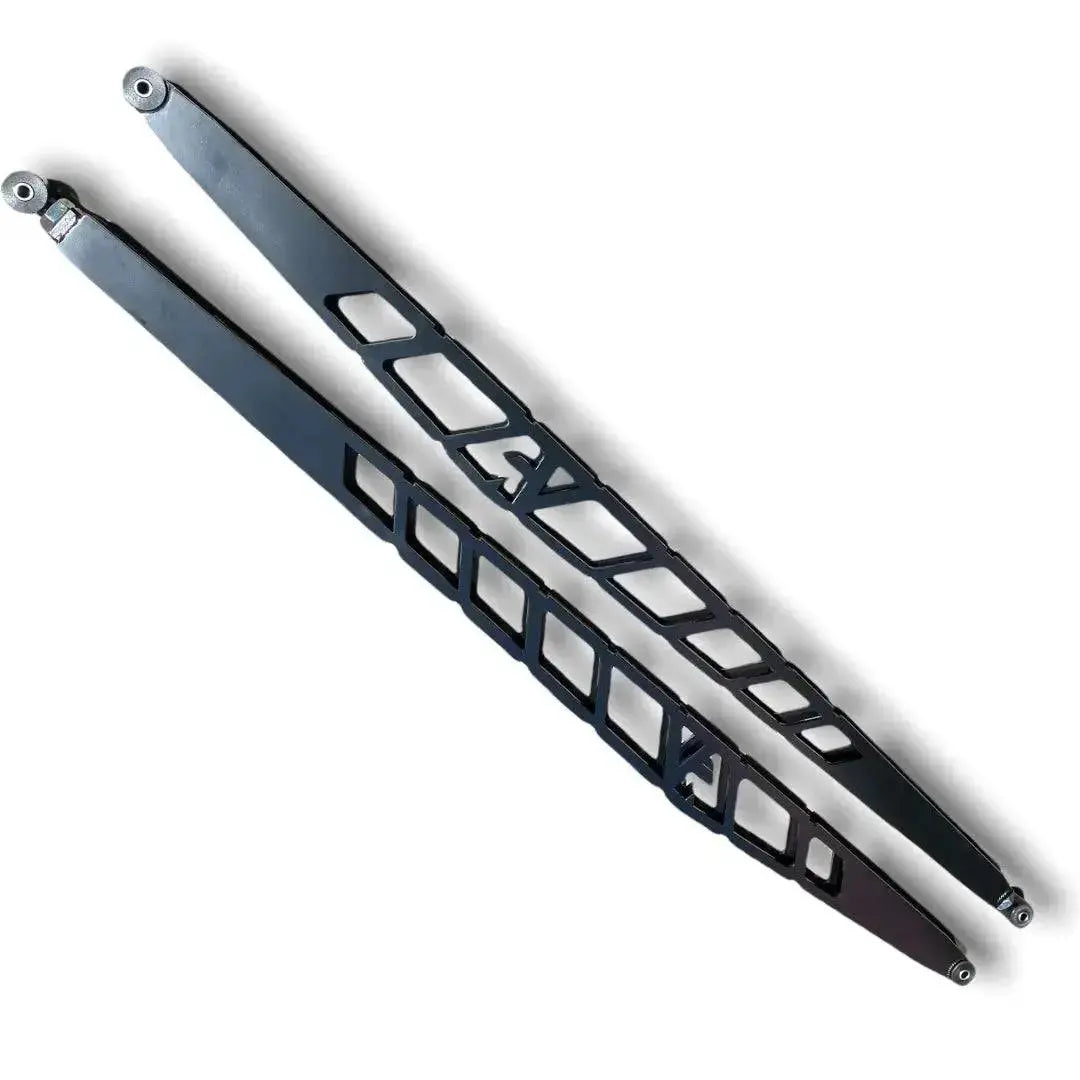
That's where ladder traction bars come in. At APOC Industries, we design and manufacture heavy-duty ladder bars specifically for lifted trucks. Our bars are built to control the rear axle under load, put power to the ground more effectively, and look aggressive while doing it.
What Do Ladder Traction Bars Actually Do?
When you accelerate, the rear axle tries to rotate in the opposite direction of the tires — this is called axle wrap. On a stock-height truck this movement is limited. On a lifted truck — especially one with tall lift blocks — the longer lever arm multiplies the force and the axle can twist violently.
This twisting:
- Changes pinion angle mid-acceleration
- Causes violent wheel hop
- Stresses leaf springs into an "S" shape
- Creates driveline vibration and u-joint wear
- Reduces traction and can damage components
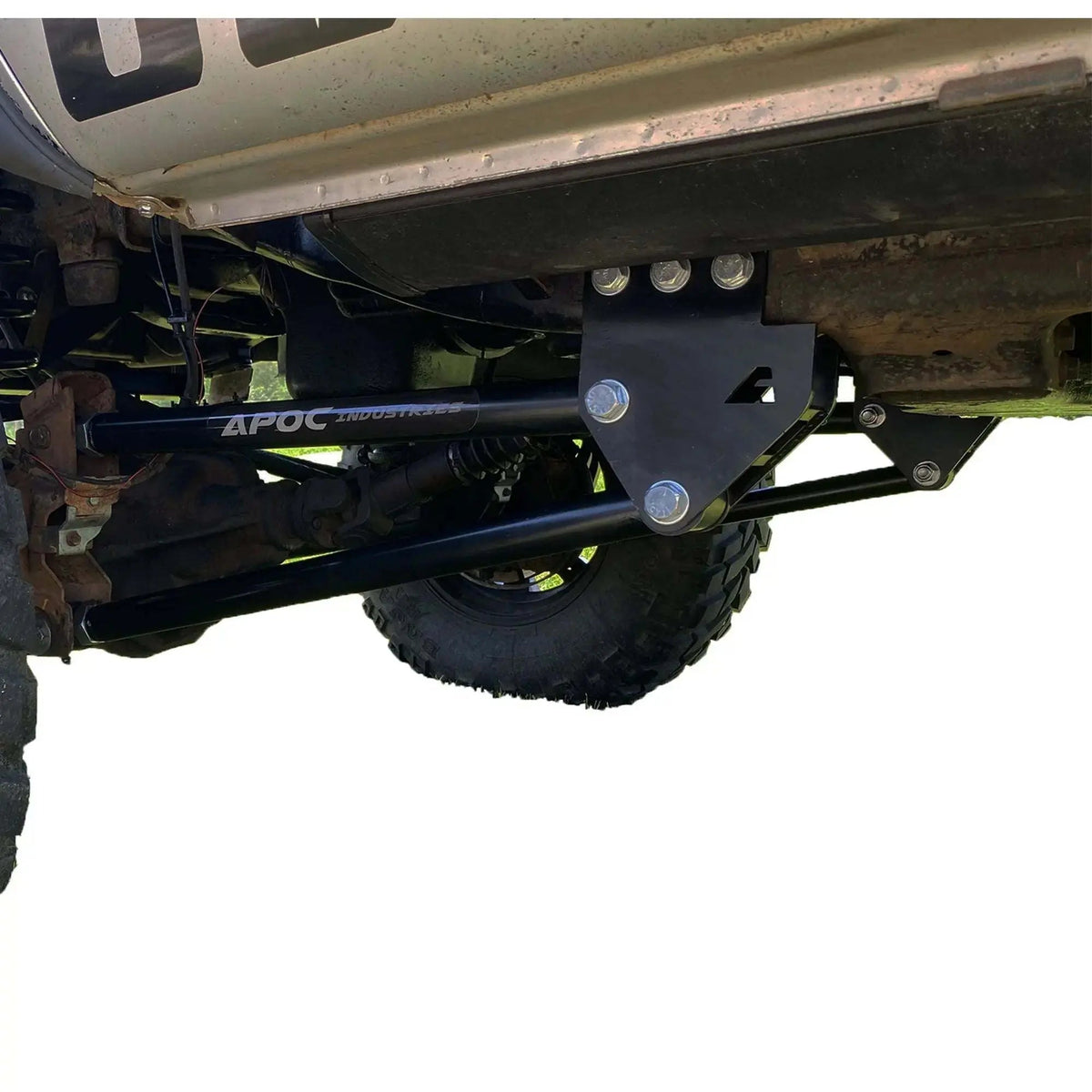
Ladder traction bars connect the rear axle to the frame, forming a rigid triangle that resists this twisting force. The result is a planted rear end, better traction, and much longer component life.
Ladder Bars vs. Other Traction Solutions
Not all traction control solutions are created equal. Here's how ladder bars compare to the alternatives for leaf spring trucks:
- Ladder traction bars (APOC style) — the gold standard for lifted leaf spring trucks. Long bars with proper geometry control axle wrap without binding the suspension. Fully adjustable for different lift heights.
- Short traction bars — common budget option, but short length creates bind in the suspension and can actually worsen ride quality. Not recommended for lifted applications.
- Add-a-leaf / helper springs — stiffen the pack to resist wrap, but sacrifice ride quality and don't address the root cause on heavily lifted trucks.
For lifted leaf spring trucks dealing with axle wrap, properly engineered ladder bars are the right tool for the job.
How Pinion Angle Plays In
Axle wrap doesn't just cause wheel hop — it dynamically changes your pinion angle under acceleration. When the axle rotates, the pinion nose dips or rises, throwing the driveshaft u-joints out of their operating range. This causes driveline vibration that's often mistaken for a bad u-joint or driveshaft balance issue.
By preventing axle wrap, ladder traction bars keep your pinion angle consistent under load — eliminating that vibration at the source rather than chasing symptoms.
How to Choose the Right Bar Length
Bar length is one of the most important factors in traction bar performance — and at APOC, we take the guesswork out of it. Every bar is engineered to the specific vehicle, matched to the wheelbase, frame geometry, and lift range of that application. We make our bars as long as the vehicle allows, because longer is always better.
- Longer bars create a shallower angle between the axle mount and frame mount, meaning less bind as the suspension cycles, better axle wrap control, and a smoother ride.
- Shorter bars create a steeper angle that fights suspension travel, causing bind, a harsh ride, and reduced effectiveness.
- Depending on the vehicle, APOC bars range from 55" up to 82" — each length dialed in for that specific platform, not a one-size-fits-all compromise.
- All APOC bars are fully adjustable so you can re-set the geometry if you change your lift height down the road.
Key Benefits of APOC Ladder Traction Bars
- Dramatically reduces or eliminates axle wrap and wheel hop
- Improves traction under hard acceleration and towing
- Protects leaf springs, u-joints, and driveshaft
- Maintains consistent pinion angle under load
- Fully adjustable design for changing lift heights
- Heavy-wall tubular or CNC boxed construction
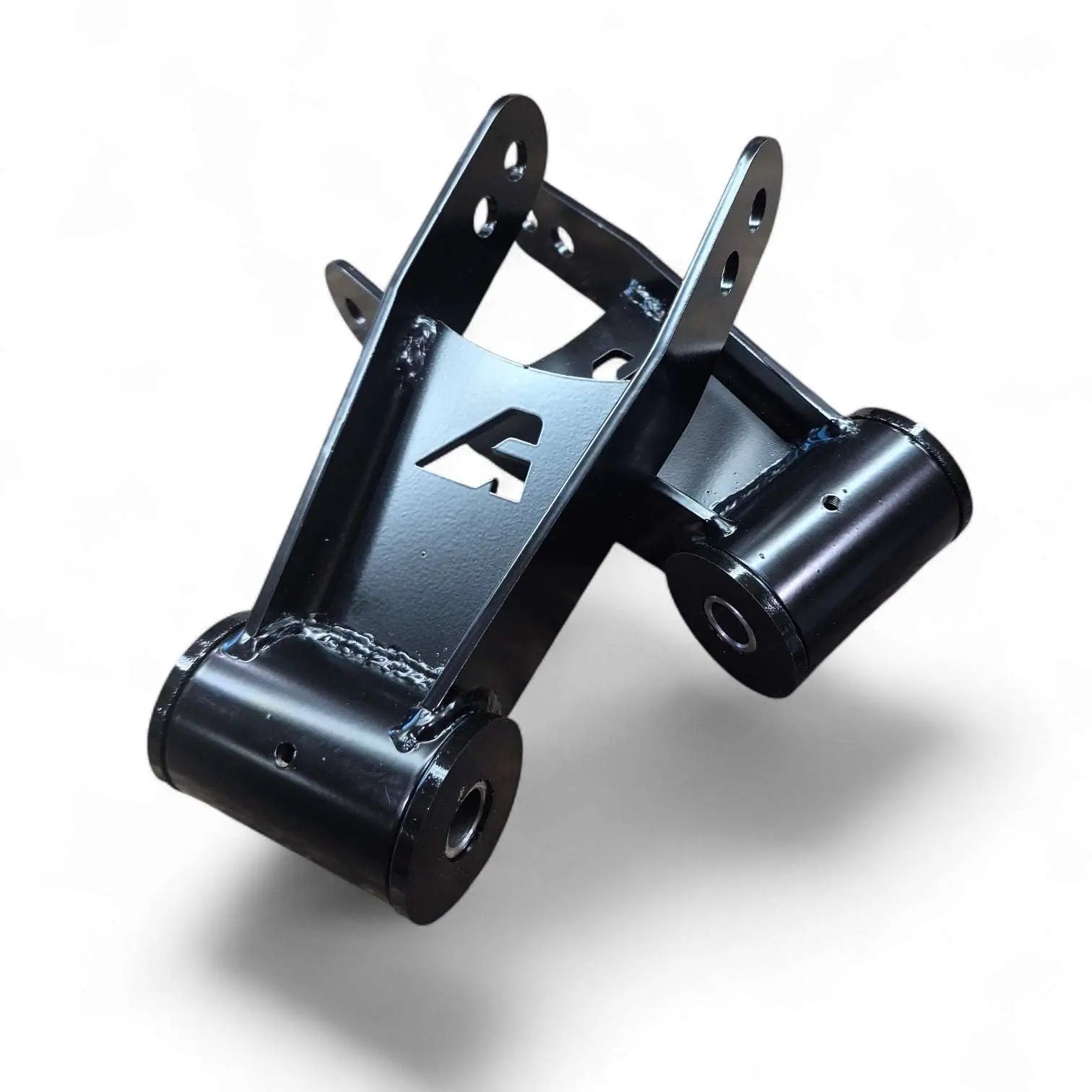
- Premium PTMEG polyurethane bushings with lifetime warranty
- Vehicle-matched length from 55" to 82" — engineered for each application
- Bolt-on axle mounts (clamp or U-bolt style) and frame mounts — no cutting or welding required
Installation Overview
APOC ladder traction bars are a true bolt-on upgrade — no cutting, no welding, no fabrication required. Most installs can be completed with basic hand tools in 2–4 hours. Each kit includes all necessary hardware, mounting brackets, and bushings. Always refer to the vehicle-specific installation guide included with your kit before beginning.
Who Needs Ladder Bars?
You should strongly consider ladder traction bars if your truck has:
- Lift blocks taller than stock (especially 4"–8"+)
- Larger, heavier tires
- Increased horsepower or torque
- Frequent towing or hard launches
Even many daily-driven lifted trucks benefit from the added control and reduced wear.
Shop APOC Ladder Traction Bars by Vehicle
Find the right bars for your truck:
- Dodge Ram:
- Ford Super Duty:
- Chevy Silverado / GMC Sierra:
Why Choose APOC Ladder Bars?
We build our ladder bars in the USA with thick-wall tubing or CNC-cut boxed designs, quality bushings, and proper mounting solutions for real-world use. They're designed to work on lifted trucks — not just look good on a show truck.
Whether you're towing heavy, launching hard, or just want a more controlled ride from your lifted Ram, Ford, or Chevy, ladder traction bars are one of the highest-value upgrades you can make.
Ready to lock down your rear end? Shop All Ladder Traction Bars →

Leave a comment
This site is protected by hCaptcha and the hCaptcha Privacy Policy and Terms of Service apply.